Malta for Muslim Travellers
Halal Food, Prayer, Places to Stay — the Complete Guide to a Muslim-Friendly Malta Trip
One of Europe’s smallest countries, packed with UNESCO history, turquoise sea and a small, warm Muslim community. Here is everything a Muslim traveller needs: where to eat halal, where to pray, where to stay, and how to plan the perfect trip.
Start with Halal Food ↓ The Mosque & PrayerWelcome
Is Malta Muslim-Friendly? The Honest Answer
Malta is one of the smallest countries in the Mediterranean — an island you can cross in under an hour — yet it welcomes millions of visitors every year. For Muslim travellers it offers a combination that is hard to find in Europe: UNESCO-listed history, clear turquoise water, sunshine for much of the year, and a halal scene that is small but genuinely growing.
You are not arriving somewhere Islam is unknown. Malta has a resident Muslim community of 17,454 people (2021 census — 3.9% of the population, making Islam the country’s second-largest faith community), a purpose-built mosque, halal butchers and grocery shops, and dozens of verified halal restaurants spread across the main towns. Islam has deep roots here, too: Arab rule began in 870 CE and lasted until 1091, and the Maltese language itself descends from Arabic — you will hear familiar echoes in place names like Mdina, Rabat and Marsa.
A little honesty before the detail: you will not find a halal restaurant on every corner, and away from the Sliema–St Julian’s–Valletta belt the choices thin out. But with a small amount of planning, eating halal, praying on time and seeing the best of the island is entirely straightforward. This guide brings everything together — food, prayer, where to stay, Ramadan, a ready-made itinerary, and the practical tips we give every Muslim visitor.
Eat
Halal Food in Malta
Most of Malta’s halal restaurants sit in a compact northern belt. St Julian’s has the widest choice (12+ listed restaurants), followed by Sliema (10+) and Valletta (8+), with further options in Gżira, Buġibba, Birkirkara, Paola and Qormi — Pakistani biryani and karahi, Indian curries and tandoori, Turkish döner, pide and grills, Arabic shawarma, falafel and mezze, plus halal fast food and desserts. Short on time? Many halal restaurants deliver through Wolt and Bolt Food.
One important distinction: “halal” in Malta can mean anything from certified halal meat to a kitchen that uses a halal supplier without certification. Always ask directly about meat sourcing before you order — reputable places answer happily. Note that the big fast-food chains are not halal here: McDonald’s and KFC in Malta are not halal-certified, so choose one of the verified independent places instead. Seafood and vegetarian dishes are excellent across the island and are the easy fallback in smaller towns and in Gozo, where halal options are few.
Staying in an apartment? Self-catering works well, with one caveat: Maltese supermarkets stock very little halal meat, so residents buy from small dedicated halal butchers and ethnic grocery shops in towns like San Ġwann, Gżira, Marsa, Birkirkara and Paola. Ask about the supplier and slaughter method if you need full assurance, and carry some cash — small shops may have card minimums.
Pray
Mosques & Prayer in Malta
Malta has one purpose-built mosque — and it is a good one. Here is where to pray, from Friday congregation to the airport prayer rooms.
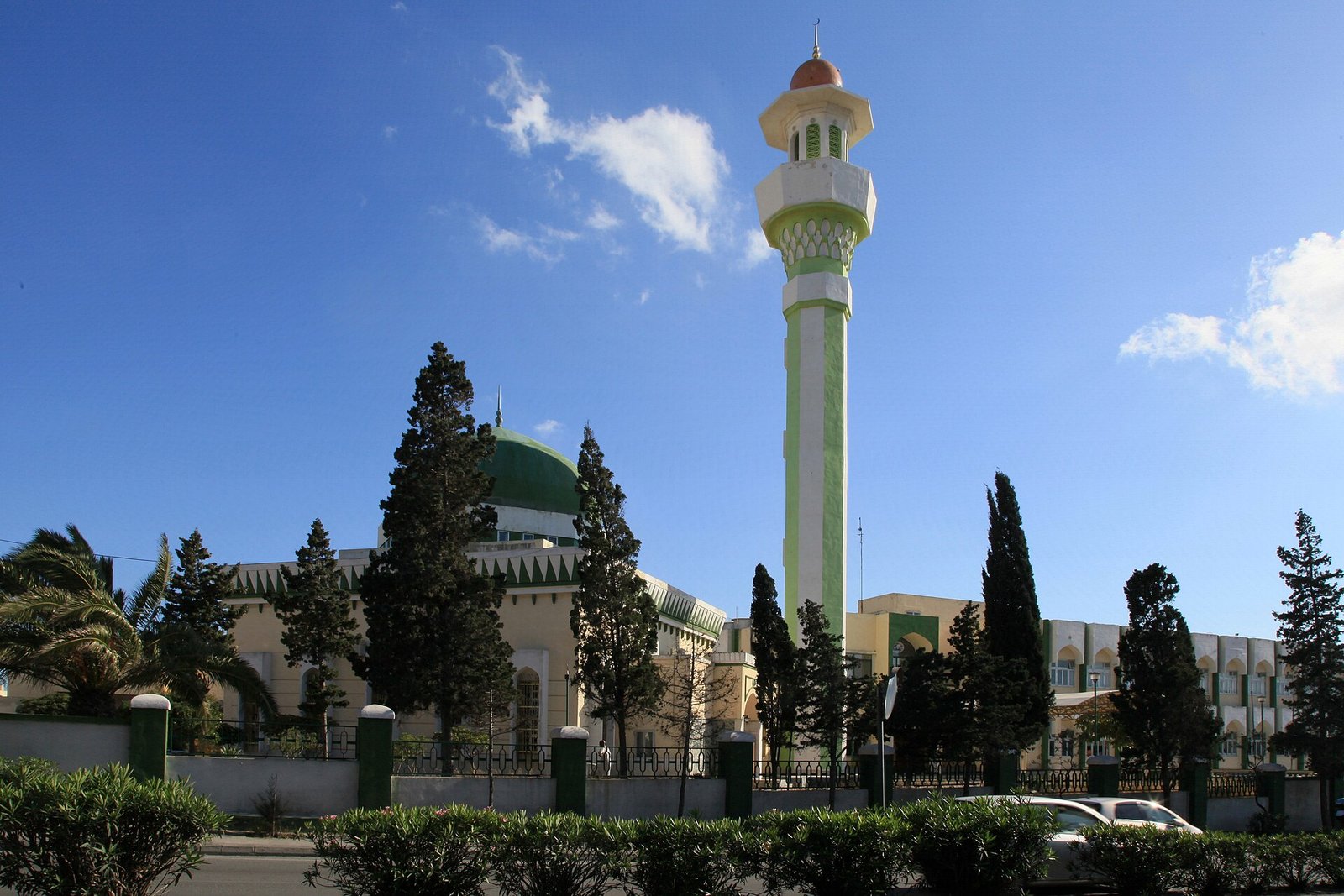
The Mosque · Paola
Mariam Al-Batool Mosque
Malta’s only purpose-built mosque stands on Corradino Hill in Paola (Triq Kordin / Corradino Road), about 5 km south of Valletta. Part of the Islamic Centre complex — with the Islamic Cultural Centre and the Mariam Al-Batool School alongside — it opened to the public in 1982 and was officially inaugurated in 1984. Built of Maltese limestone with a dome and a 31.5 m minaret, it holds around 500 worshippers, with separate prayer and ablution areas for men and women. It is administered by the World Islamic Call Society and is the heart of Muslim life in Malta.
- Friday (Jumu’ah) prayer is held here in congregation — the island’s main Friday gathering. Visitor reports put the khutbah in the early afternoon (around 1:15 pm), with a second congregation on busy weeks; arrive early, as the car park fills fast.
- Finding it: buses run to Paola from Valletta, or take a taxi/Bolt — allow around 30–40 minutes door to door from the Sliema–St Julian’s belt.
- Contact: the Islamic Centre’s website is mariamalbatool.com; the Centre’s published phone number is +356 2169 7203. Check current prayer and visiting arrangements there before you go.
Stay
Where to Stay: Muslim-Friendly Areas
Where you base yourself makes a halal trip much easier. Sliema and St Julian’s are the best all-round choice: the widest spread of halal restaurants within walking distance, seafront promenades for evening walks, and a five-minute ferry across the Grand Harbour to Valletta. Valletta itself suits travellers who prefer history on the doorstep and quieter evenings, with halal options in the capital too. Buġibba (St Paul’s Bay) is the budget-friendly resort option, with its own halal takeaways and fast food a short walk from the seafront.
Malta has few hotels that market themselves as fully halal, so “Muslim-friendly” here usually means something simpler: staff who will help. When you book, ask for a prayer mat or a quiet prayer space, and whether the minibar alcohol can be removed — hotels are used to such requests. Confirm them at booking rather than at check-in. Malta’s high season runs from June to September and good rooms fill fast, so book ahead in summer.
Ramadan
Ramadan in Malta
Ramadan in Malta is centred on the community around the Paola mosque. The Islamic Centre is the island’s focal point for the month — Taraweeh prayers, community gatherings and the Eid al-Fitr celebrations at the end of Ramadan all happen around Mariam Al-Batool, and the Centre’s Eid reception is a long-standing fixture attended by community and national guests alike. If you are visiting during Ramadan, an evening at the mosque is the surest way to break your fast with the local community.
On the food side, some halal restaurants mark Ramadan with iftar menus and adjusted opening hours, and a few open late into the night — but this changes year to year, so check the restaurant listings and the restaurants’ own pages before you go, and book ahead for group iftars. Halal grocery shops and butchers stock up on Ramadan staples, which makes self-catering easy if you are staying in an apartment. Malta sits at a Mediterranean latitude, so fasting hours depend heavily on the season: a winter Ramadan means short, easy fasts, while a summer one brings long days — plan sightseeing for the mornings and rest in the afternoon heat.
Good to Know
Practical Tips for Muslim Travellers
💶 Money
Malta uses the euro. Cards are widely accepted in restaurants and hotels; smaller grocery shops may prefer cash or set card minimums, so keep some notes on you.
🗣️ Language
English is an official language alongside Maltese and is spoken everywhere, so communication is never a problem. Maltese descends from Siculo-Arabic — listen for familiar words, and note that most place names are Arabic in origin.
🚌 Getting Around
Tallinja buses connect most towns and distances are short — nowhere is much more than an hour away. The Valletta–Sliema ferry takes about five minutes, the Gozo ferry about 25 minutes from Ċirkewwa, and a rental car makes Mdina, Gozo and the south coast easier. Taxis and Bolt are handy for the mosque in Paola.
👗 Dress & Beaches
Malta is a beach destination, and swimwear is normal at beaches and pools. Away from the water, dress as you would in any European town. For the mosque — and for Malta’s many churches and religious sites — modest dress covering shoulders and knees is respectful and appreciated. There are no restrictions on hijab.
🍷 Alcohol & Pork
Malta is a predominantly Catholic country where alcohol and pork are served almost everywhere, including in some restaurants that also cook halal meat. If this matters to you, ask how dishes are prepared. Seafood and vegetarian food is excellent, widely available, and naturally halal-friendly.
📜 A Note of History
Arab rule (870–1091) shaped Malta’s language, agriculture and place names, and Muslim communities remained on the island for centuries afterwards. The Maymūnah Stone — a 12th-century Muslim tombstone — is one of the most famous survivals of that era. Islam is part of Malta’s story, not an import to it.
Plan
A 3-Day Muslim-Friendly Malta Itinerary
Short on planning time? This simple plan covers the island’s highlights without rushing — and keeps you close to halal food every evening.
Day 1 — Valletta, the Capital
Arrive, settle in, and walk the capital: the Upper Barrakka Gardens for the Grand Harbour view, St John’s Co-Cathedral, and the honey-stone grid streets of the UNESCO-listed old town. If Day 1 is a Friday, go to Valletta in the morning and leave time for Jumu’ah at the Mariam Al-Batool Mosque in Paola in the early afternoon. Finish with dinner in the capital — Valletta has its own cluster of halal restaurants, and a sweet finish from our halal desserts guide.
Day 2 — Sliema, St Julian’s & the Sea
Take the five-minute ferry across the harbour to Sliema, walk the seafront promenade to St Julian’s, and spend the afternoon by the water — a boat trip out to the Blue Lagoon on Comino is the classic add-on in good weather. Base yourself here for dinner: this belt has the widest halal choice on the island, from Pakistani and Indian restaurants to Turkish grills, all within walking distance of the promenade.
Day 3 — Mdina & the South
Morning in Mdina, Malta’s former capital — a largely car-free “Silent City” of narrow lanes — paired with neighbouring Rabat. Then head south: the Blue Grotto cliffs and the UNESCO temples of Ħaġar Qim and Mnajdra, with a seafood or vegetarian lunch by the water. Got a fourth day? Swap this day for Gozo — a 25-minute ferry from Ċirkewwa to Victoria’s Citadel and the cliffs at Dwejra — remembering that halal options there are few, so plan around seafood.
Quick Answers
Muslim Travel in Malta — FAQs
Is Malta Muslim-friendly?
Yes. Malta is one of Europe’s safest countries, with a tolerant, multicultural society and a resident Muslim community of 17,454 people (2021 census). There is a purpose-built mosque, halal restaurants and butchers, and no restrictions on hijab or Islamic dress. Muslim visitors are warmly welcomed, and Islam has been part of the island’s story since 870 CE.
Is halal food easy to find in Malta?
In the main areas, yes. Sliema, St Julian’s, Valletta, Gżira and Buġibba have the best choice, with dozens of halal restaurants listed on HalalMalta, and many offer delivery through Wolt and Bolt Food. Options are thinner in Gozo and smaller villages, so plan those days around seafood, vegetarian dishes or a meal near your base. See the halal restaurant directory.
Where is the mosque in Malta?
The Mariam Al-Batool Mosque is in Paola, on Corradino Hill (Triq Kordin / Corradino Road), about 5 km south of Valletta. It is Malta’s only purpose-built mosque, opened in 1982 as part of the Islamic Centre complex, holds around 500 worshippers, and hosts the island’s main Friday (Jumu’ah) congregation.
Can I pray in Malta?
Yes. Daily prayers are most easily offered in your hotel room — most visitors do this, and many hotels will provide a prayer mat or a quiet space if asked. Friday congregational prayer is held at the Paola mosque, and Malta International Airport has two multi-faith prayer rooms (Level -1 before security, and in the non-Schengen departures area). Any prayer-times app will give accurate times and qibla direction anywhere on the island.
Is Malta good for Ramadan?
Yes — Ramadan revolves around the community at the Paola mosque, with Taraweeh prayers and Eid al-Fitr celebrations at the Islamic Centre, and some halal restaurants offer iftar menus and later hours during the month. The island is quieter and the welcome warm; check restaurant listings for the current year’s Ramadan arrangements, and book group iftars ahead.
What should Muslim travellers pack for Malta?
A travel prayer mat (compact, for hotel and airport prayers), modest clothing for mosque and church visits, sun protection and swimwear for the beaches, comfortable walking shoes for Valletta’s and Mdina’s stone streets, and a light jacket outside the summer months. Download a prayer-times app before you arrive, and keep some euro cash for small halal grocery shops.
Photos: Frank Vincentz (CC BY-SA 3.0), via Wikimedia Commons · Grand Harbour — TerryDOtt (CC BY 4.0)
Plan Your Halal Malta Trip
Start with the food — browse Malta’s verified halal restaurants, plan by location or cuisine, and build your trip around the island’s best tables.
Browse Halal Restaurants Halal Food by Location