
Fire & Fury: The Karahi That Never Apologises
A deep amber bowl of slow-cooked chicken curry is not just dinner — it is a story told in spices, a recipe passed through generations, and a dish that has quietly conquered the world. Slow-cooked chicken curry garnished with fresh coriander and ginger — served the traditional way. There is a moment, somewhere between the…
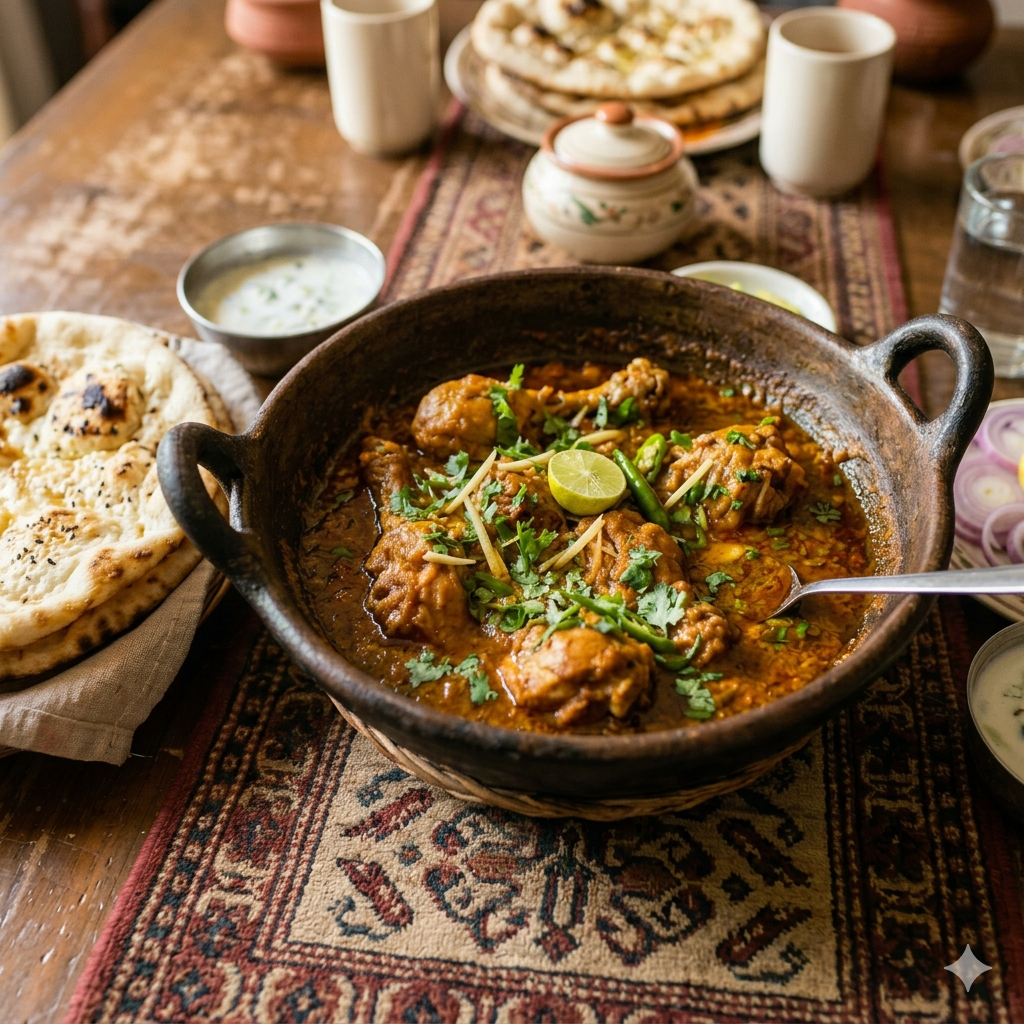
A deep amber bowl of slow-cooked chicken curry is not just dinner — it is a story told in spices, a recipe passed through generations, and a dish that has quietly conquered the world.
Slow-cooked chicken curry garnished with fresh coriander and ginger — served the traditional way. There is a moment, somewhere between the first bloom of whole spices in hot oil and the final scattering of fresh coriander, where a kitchen transforms. The air thickens with the warm amber of turmeric, the dark sweetness of caramelized onion, and something indefinably ancient. That is the moment chicken curry begins. Few dishes carry as much cultural weight and culinary complexity as a properly made chicken curry. Whether you encounter it in a Mumbai home, a London restaurant, or a clay pot in Lahore, the bones of the dish are the same — and yet every cook will insist their version is the only real one.
“Chicken curry is not a single recipe. It is a philosophy — the idea that with the right spices, patience, and heat, the simplest ingredients can become extraordinary.”
What makes a great chicken curry?
The answer, chefs and home cooks agree, lies in layers. A great curry is built in stages: whole spices are bloomed first to release their essential oils, then aromatics like onion, ginger, and garlic are cooked down until they almost disappear into the sauce. The tomatoes come next, acidic and bright, before the ground spices are added and toasted briefly in the oil until the raw edge softens. The chicken — ideally bone-in for depth of flavor — is added to this rich masala base and left to simmer, absorbing every whisper of spice. The result is the deeply colored, glossy gravy you see in the bowl above: not thin, not stodgy, but clinging richly to each piece of meat.
The spice cabinet behind every great bowl:
The spices visible in the photo — whole peppercorns and green cardamom in the terracotta dish — hint at the layered approach behind authentic preparation. These are the workhorses of Indian cooking, each playing a distinct role.
Whole peppercorns, Green cardamom, Turmeric, Coriander, Cumin, Garam masala
Heat & depth, Floral warmth, Color & earthiness, Citrus & body, Smokiness, Finishing warmth
Julienned ginger on top is not merely decorative. It cuts through the richness of the gravy with a clean, peppery bite — a garnish that also functions. Fresh coriander brings the brightness that ties everything together at the end.
Bone-in vs. boneless — does it matter?
For curries cooked low and slow, bone-in chicken pieces are almost universally preferred by traditional cooks. The marrow enriches the gravy, the gelatin adds body, and the connective tissue keeps the meat from drying out over a long cook. The photograph makes this clear — the chicken has given itself fully to the sauce, yet remains intact and yielding. Boneless works particularly for weeknight cooking or when serving those unfamiliar with navigating bones. But if time allows, the bone-in version delivers a depth that is simply difficult to replicate.
4 tips for a better chicken curry at home
- Always bloom whole spices in oil before adding aromatics — 30 seconds is enough to unlock their full potential.
- Cook your onions low and slow until deeply golden — this is the flavor foundation. Rushing this step costs you richness.
- Add ground spices after the tomatoes have cooked down, not before. This prevents burning and helps them integrate evenly.
- Rest the curry for 10 minutes off the heat before serving. The gravy tightens, and the flavors settle into something far more cohesive.
Why chicken curry endures
In an era of culinary trends that rise and fall within a season, chicken curry is immovable. It was named the most popular dish in Britain years ago and has never relinquished that title. Across the Indian diaspora, it is the first dish taught to children leaving home and the last thing requested by those returning. It is approachable enough for a beginner and deep enough to occupy a lifetime of refinement. The image at the top of this post captures something of that gravity. The copper spoon, the dark linen, the terracotta bowls of garnish — all of it frames a dish that needs no ceremony to be important. It simply is. A bowl of chicken curry is one of the most complete things a cook can offer — warmth, complexity, comfort, and culture in a single serving. Whether you follow a precise regional recipe or improvise from what your spice cabinet holds, the act of making curry is itself a tradition. The measurements are secondary. The intention — to nourish, to welcome, to share — is everything. Start with good chicken, take your time with the onions, and trust the spices. The rest will follow.