Malta Muslim Travel Guide 2026
Your Complete Muslim Travel Guide to Malta Prayers, mosques, halal restaurants, and everything in between — all in one place before you land. Mediterranean, EuropeUpdated June 202610 min read What’s in this guide 1: Malta — An Island That Gets Under Your Skin Ninety kilometres south of Sicily and close enough to Africa that the…
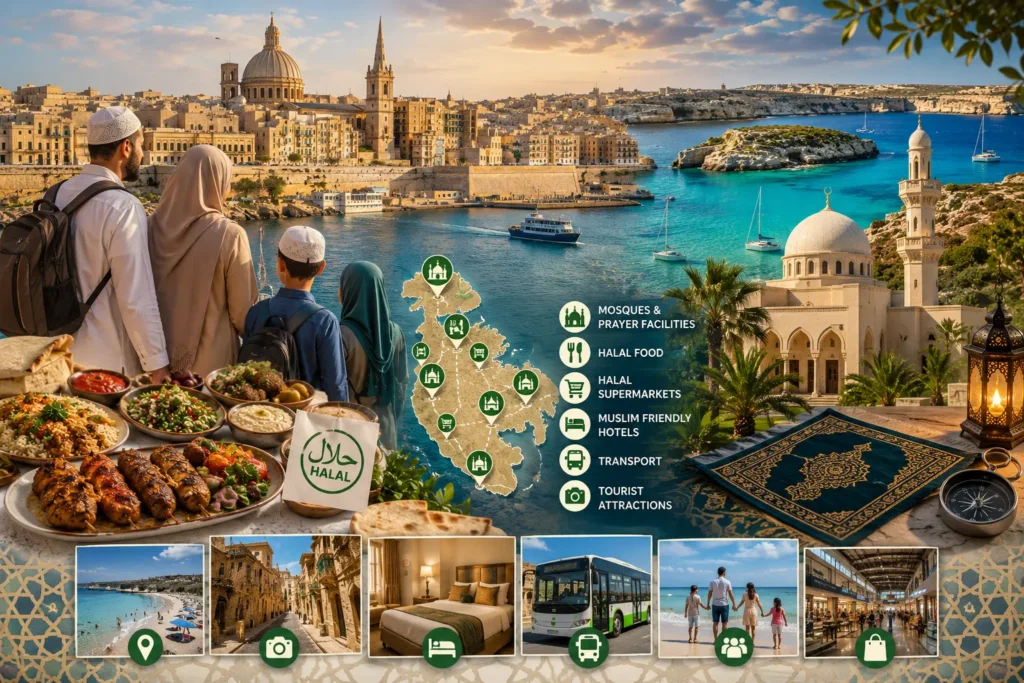
Your Complete Muslim Travel Guide to Malta
Prayers, mosques, halal restaurants, and everything in between — all in one place before you land. Mediterranean, EuropeUpdated June 202610 min read
What’s in this guide
- Malta — a quick introduction
- Prayer times and qibla direction
- Mosques and prayer spaces
- Halal food map — area by area
- Maltese dishes — halal or not?
- Practical tips for Muslim travellers
- Best time to visit
1: Malta — An Island That Gets Under Your Skin
Ninety kilometres south of Sicily and close enough to Africa that the warm winds carry a hint of the continent, Malta is one of those rare places where every narrow street has something to say. Ancient temples, honey-coloured fortresses, and a sea so blue you’ll find yourself staring at it for longer than you planned. More than 4,000 Muslims call Malta home today, and the number of Muslim tourists visiting each year is steadily growing. Whether you’re looking for a reliable place to pray, hunting down a solid halal meal, or want the peace of mind that comes from planning, Malta can deliver all of it. The facilities aren’t as abundant as in larger European cities, but with a little preparation, your trip can be genuinely comfortable and deeply enjoyable.
What makes Malta quietly special for Muslim travellers is its history. The Maltese language itself has deep Arabic roots — linguists estimate that a significant portion of everyday Maltese words trace directly back to Arabic. Look at the ornate enclosed balconies on the old townhouses, the latticed wooden screens, the architecture — and you’ll sense an Islamic thread woven into the island’s oldest layers. Malta is overwhelmingly Catholic today, but its soul has a Mediterranean-Arab dimension that feels genuinely familiar.
2: Prayer Times and Qibla Direction
Malta sits in the central Mediterranean, so prayer times shift noticeably between summer and winter. In June, the days are long — Isha comes quite late in the evening. Here are the approximate prayer times for Valletta in early June:
Fajr 05:14 Dawn prayer
Dhuhr 12:15Midday prayer
Asr 15:25Afternoon prayer
Maghrib 17:52Sunset prayer
Isha 19:12Night prayer
Qibla direction from Malta, South-East — approximately 127–130° from true north. Use Muslim Pro or IslamicFinder for a precise bearing from your exact location.
Useful tip: SalahTimes.com lets you download a full monthly prayer calendar for Malta as a CSV or iCalendar file — import it into your phone’s calendar, and you’ll have prayer-time reminders without needing an internet connection every time. For Jumu’ah: the only reliably organised Friday prayer in Malta takes place at the Mariam Al-Batool Mosque in Paola. There are informal gathering spots in Valletta and St Julian’s, but for a proper congregational Friday prayer, Paola is where you need to be. The space is limited, so arrive with time to spare.
3: Mosques and Prayer Spaces
Malta is a small country — there is only one officially recognised mosque across the entire archipelago. That said, there are a handful of other places where Muslims gather to pray, and the community is warm and welcoming to visitors.
Mariam Al-Batool Mosque — Paola
Triq Kordin, Paola, Malta. Roughly 3 km south of Valletta. Formerly known as the Islamic Centre of Malta, this is the island’s only officially recognised mosque. Open for all five daily prayers and Jumu’ah. Clearly marked on Google Maps. 5 daily prayers, Jumu’ah available on Google Maps
Paola and Marsa area prayer spots
These neighbourhoods are home to Malta’s largest Muslim community. Informal prayer rooms and Islamic study circles can be found here — residents are always happy to point you in the right direction. Halal grocery shops and butchers are also concentrated in this area. Community hub, Halal groceries nearby
Worth checking: A second, larger mosque was planned for Malta and had not opened as of early 2026. Verify the situation before your trip — it may be open by the time you arrive. For prayer space in hotels: larger properties such as the Hilton Malta in St Julian’s, the Intercontinental, and several other upscale hotels will arrange a quiet room for prayer if you ask the concierge. It helps that Malta’s hospitality industry is accustomed to diverse guests — the request is rarely met with confusion.
4: Halal Food Map — Area by Area
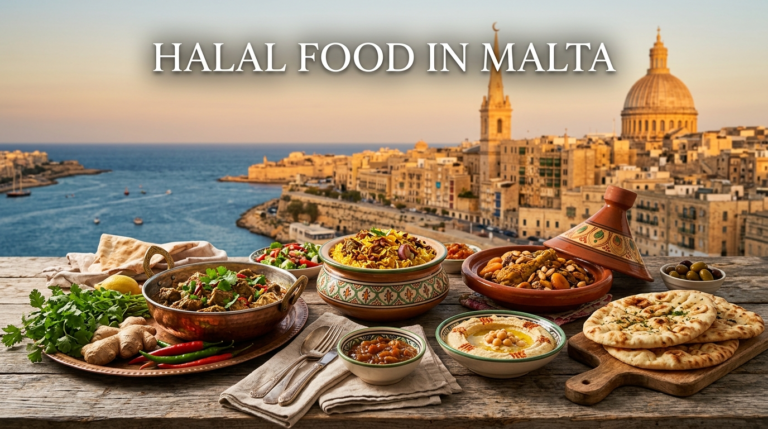
Finding halal food in Malta is manageable but requires a bit of awareness. The restaurants are concentrated in Valletta, St Julian’s, Sliema, and Gzira. One important caveat: Malta has no official halal certification body as of 2026. Restaurants source halal-certified meat from suppliers in the UK and continental Europe, but there is no independent on-site verification. At each restaurant, it’s worth asking three questions: where is the meat sourced from, is it certified by a named body, and is the kitchen alcohol-free for cooking?
St Julian’s, Shakinah: A beloved seafront Indian restaurant — one of the most consistently recommended halal spots in Malta. Small and popular, so booking is essential. The atmosphere is relaxed, and the views make a meal here genuinely memorable. Indian Fully halal Book ahead
Suruchi: Indian and Middle Eastern cuisine on Ball Street. Notably holds CIBAL Halal certification — a meaningful distinction in a country with no national certifying body. Their sizzling tandoor platter for groups is highly recommended. IndianCIBAL certified Group-friendly
Halo Kebab and Tacos: A trendy halal spot that has built a strong following on social media. The fusion of kebabs and tacos sounds unusual but works well. Good for a casual, affordable meal in the evening. Turkish-FusionHalalBudget-friendly
Sliema; Mamounia: Malta’s first Moroccan restaurant, run by Muslim owners at Qui-si-sana Place. Couscous and tagine are done with care, using both local and imported Moroccan ingredients. A good choice when you want to eat halal in an environment owned and operated by Muslims. Moroccan Muslim-owned alcohol-serving
Gzira; Millennium Kebab: A solid Turkish restaurant on the Strand in Gzira, with a second branch in St Julian’s. Lamb kebabs, chicken shish, and burgers made with reliably halal meat. When you need a quick, filling halal meal, this is a dependable choice.
Moo’s Kebab: Just along the Strand from Millennium — Turkish kebabs, grills, and pizza with takeout available. A practical option when you’re on the move and don’t want to sit down for a full meal.
Valletta; Falafel Street Restaurant
A budget-friendly spot in the capital serving falafel wraps and other Middle Eastern vegetarian items. If you’re spending the day sightseeing in Valletta, this is where you stop for a quick halal lunch without breaking the bank.
Ali Baba: A Lebanese family restaurant that has been run by the same family for 25 years, using both local produce and imported Lebanese ingredients. Tiny, authentic, and always busy — book a table well in advance.
Bugibba; Oz Sofra Kebab
The go-to halal option if you’re staying in Bugibba or the St Paul’s Bay area in north Malta. Turkish kebabs with a loyal local following — a reassuring find when you’re away from the main tourist belt. Self-catering tip: The Paola and Marsa areas have halal butchers and grocery stores where you can buy certified halal meat. If you’re staying in an apartment or Airbnb, cooking your own meals a few days a week is both economical and removes any uncertainty about certification.
5: Maltese Dishes — What’s Halal and What to Avoid
Malta’s local cuisine has some genuinely delicious dishes that are naturally halal — and a few that aren’t. Knowing the difference means you can order with confidence at any restaurant, not just a dedicated halal establishment.
Lampuki: Mahi-mahi fish, a Maltese favourite and the centrepiece of the autumn fishing season. Grilled or baked — completely halal.Halal
Aljotta: A light, fragrant fish soup with garlic, tomatoes, and fresh herbs. One of Malta’s most comforting dishes is entirely halal.
Ftira: Traditional Maltese flatbread stuffed with tuna, capers, olives, tomatoes, and potatoes. A perfect street-food lunch — halal as long as the filling doesn’t include cured pork.Halal
Bigilla: A broad bean dip seasoned with garlic and fresh herbs. Malta’s answer to hummus is just as good. Entirely plant-based and halal.Halal
Mqaret: Deep-fried date pastries — sweet, warm, and dusted with sugar. A genuinely wonderful street snack and fully halal.Halal
Pastizzi: Malta’s beloved flaky pastry filled with ricotta or mushy peas. Delicious — but the traditional recipe often uses lard in the pastry. Ask about the recipe before eating. Ask first
Fenek (rabbit stew): Malta’s national dish is slow-cooked rabbit that is tender and deeply flavoured. However, it is traditionally marinated and cooked in red wine. Best avoided. Avoid
Marsaxlokk fresh fish: The Sunday fish market in the harbour village of Marsaxlokk is one of Malta’s unmissable experiences. Fresh-caught fish at waterside restaurants — naturally halal and genuinely spectacular.
6: Practical Tips for Muslim Travellers
Dress modestly. Bring appropriate clothing for mosque visits. Women should carry a headscarf. On Malta’s beaches, burkinis are completely accepted, and no one will give you a second glance. Verify halal claims. Malta has no official halal authority. At each restaurant, ask about the meat supplier, the certification body, and whether alcohol is used in cooking. Muslim Pro app: Your most reliable companion on the island — accurate prayer times, qibla direction, and a map of nearby mosques and halal restaurants.
Currency: Euro (€)Malta is part of the EU and uses the Euro. Cash and cards are both widely accepted. ATMs are easy to find across the island.
Language: Maltese and English are both official languages — you will not face any language barrier. Arabic speakers are often pleasantly surprised to catch familiar words in everyday Maltese.
Where to stay: An apartment or Airbnb gives you a kitchen and removes the daily pressure of finding halal food. The Hilton in St Julian’s has a track record of welcoming Muslim guests warmly.
On alcohol in halal restaurants: The majority of halal-certified and Muslim-friendly restaurants in Malta still serve alcohol to other customers. The food itself remains halal, but if you prefer a fully alcohol-free environment, opt for Muslim-owned establishments such as Mamounia and Ali Baba.
7: Best Time to Visit
April – June: The ideal window. Warm and pleasant, crowds are manageable, and the long days give you ample time for both sightseeing and prayers. Highly recommended.
July – August: Peak season — hotels fill up fast, and temperatures hit 35°C. The beaches are packed. Worth it if you love the heat, but plan everything.
November – March: Low season with cheaper accommodation. Temperatures range from 12–18°C — mild enough for sightseeing without the summer crowds. A good option for those who prefer quiet travel. If you’re visiting during Ramadan, a little extra planning goes a long way. Iftar time coincides with the busy evening rush at most restaurants, so booking in advance is strongly recommended. The Muslim community in Malta becomes particularly active around Eid, and attending Eid prayers at the Paola mosque is a warm and memorable experience — the congregation always welcomes visiting Muslims.
One last thought worth keeping in mind: Malta is a tolerant and genuinely welcoming country. In over a decade of Muslim travellers documenting their experiences on the island, the overwhelming theme is one of comfort, openness, and belonging. You are unlikely to feel unwelcome here — and the island itself, ancient and beautiful and quietly connected to the wider Islamic world through history, has a way of feeling like more than just a holiday destination.
Have a blessed journey
Malta is one of those rare places where Mediterranean beauty, ancient history, and an Islamic cultural thread come together in one small corner of the world. With a little planning, it makes for a wonderful halal-friendly getaway. May your prayers be answered, your food be wholesome, and your trip be full of wonder.